Prosopagnosia (Face Blindness).
There is a particular kind of social dread that comes with not knowing faces — the colleague who greets you warmly and might be anyone, the child you collect from school by their coat, the stranger in the mirror who turns out to be you. People with prosopagnosia have normal eyesight and normal minds; they simply cannot do the one thing the rest of us do thousands of times a day without thinking. It is one of the clearest proofs that the brain runs a dedicated machine just for faces — and that the machine can break on its own.
AnomalyDesk is reader-supported. Articles may contain affiliate links to books and primary-document collections. Read our full funding disclosure.
Confidence key — claims in this file are tagged as follows Verified primary documentary support · Claimed asserted by a named party, not independently confirmed · Disputed credible sources contradict each other · Unverified we could not substantiate it · how we decide
What prosopagnosia is, in a paragraph.
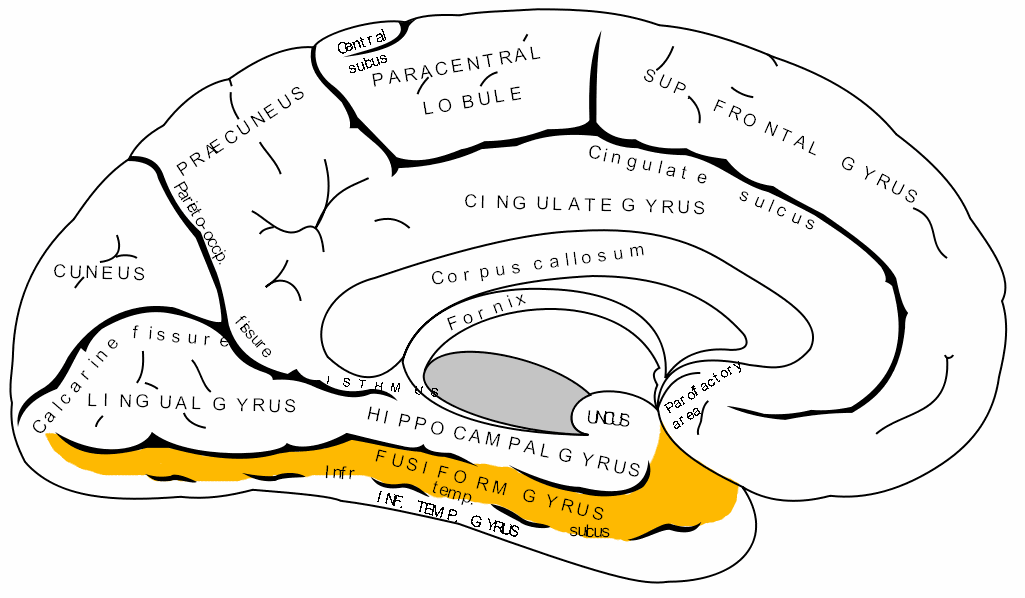
Prosopagnosia — from the Greek for “face” and “not knowing,” and commonly called face blindness — is a specific impairment in the ability to recognize faces, occurring despite intact basic vision, intelligence, and memory. People with the condition can see a face perfectly well — they can describe its parts, judge age or expression, and recognize that it is a face — but they cannot use it to identify whose face it is. In severe cases they fail to recognize close family members, lifelong friends, famous people, or even their own reflection or photograph, and instead rely on workarounds: voice, gait, hairstyle, clothing, context, distinctive features, or simply waiting for the other person to reveal who they are. The term was introduced by the German neurologist Joachim Bodamer in 1947 in describing patients with brain injury. There are two broad forms. Acquired prosopagnosia results from damage (stroke, head injury, tumor, or neurodegeneration) to face-processing regions of the brain, typically in the occipitotemporal cortex of the right hemisphere — most notably the fusiform face area (FFA) in the fusiform gyrus, a region that imaging shows is especially active when we view faces, along with connected areas (the occipital face area and others) that together form a face-processing network. Developmental (or congenital) prosopagnosia occurs in people who never had a brain injury but fail to develop normal face recognition; once thought rare, it is now recognized as relatively common, affecting an estimated around 2% of the population in milder-to-moderate forms, often running in families (suggesting a genetic component) and frequently unrecognized — many affected people assume everyone finds faces as hard as they do, or are mistaken for being aloof or forgetful. Prosopagnosia is important to neuroscience because it provides striking evidence that the brain treats faces as a special category with dedicated machinery, separable from general object recognition and from other functions (a person can have profound face blindness while recognizing objects, words, and places normally) — part of the broader story of the brain's modular, specialized systems. It also illustrates the dissociation, seen in the Capgras delusion, between recognizing a face and the feelings or knowledge attached to it: some prosopagnosics show covert recognition (autonomic responses to familiar faces they cannot consciously identify), the mirror image of Capgras. The condition is real, documented, and now well characterized — the neurologist Oliver Sacks, himself severely prosopagnosic, helped bring it to public attention. Its open questions are about the exact organization of the face network, the genetic and developmental basis of the congenital form, the spectrum of severity (face recognition varies enormously across all people, with “super-recognizers” at the other extreme), and how best to help those affected.

The documented record.
It is a specific, real impairment
Face recognition fails selectively. Verified Prosopagnosia impairs face identification despite intact vision, intelligence, and (often) object recognition — a documented, category-specific deficit since Bodamer's 1947 description [1][2].
The face-processing network
The brain has dedicated face machinery. Verified Acquired cases involve damage to right occipitotemporal regions, especially the fusiform face area; imaging confirms a specialized face network [1][2].
Two forms, one common
Developmental prosopagnosia is widespread. Verified Beyond acquired (injury-caused) cases, a developmental/congenital form affects an estimated ~2% of people, often familial and underrecognized [2][3].
Covert recognition
The brain can “know” without awareness. Disputed Some prosopagnosics show autonomic responses to faces they cannot consciously recognize — covert recognition, the inverse of Capgras [3].
The competing positions.
Lay misunderstanding often treats face blindness as poor memory, inattention, or social rudeness. Claimed Conversely, debate continues over whether faces are truly “special” or just the most-practiced case of fine visual expertise [4].
The scientific consensus is that prosopagnosia is a genuine, category-specific neurological condition tied to a face-processing network, with common developmental as well as acquired forms. Disputed This archive treats it as documented and well characterized. The live questions are the exact network organization, the “face specificity vs. expertise” debate, the genetics of the developmental form, and the full spectrum from prosopagnosia to super-recognizers [2][3].
The unanswered questions.
Face-specific or expertise?
The debate is unresolved. Disputed Whether the brain's face machinery is truly face-specific or reflects general visual expertise is still argued [4].
The developmental basis
Genetics and development are open. Disputed Why some people never develop normal face recognition — the genes and developmental factors — is incompletely understood [2][3].
The spectrum of ability
Variation is wide and unexplained. Claimed Why face-recognition ability varies so enormously across people (to super-recognizers) is not fully accounted for [3].
Primary material.
The accessible record on prosopagnosia is held principally in these sources:
- Joachim Bodamer's 1947 description and the acquired-case literature.
- Neuroimaging of the fusiform face area and the face-processing network.
- Studies of developmental prosopagnosia prevalence, heritability, and testing (e.g., the Cambridge Face Memory Test).
- Covert-recognition studies in prosopagnosic patients.
- Oliver Sacks's writings and accounts by affected individuals.
Critical individual sources include: the acquired-case neurology; the FFA imaging; and the developmental-prosopagnosia research.
The sequence.
- 1947 Joachim Bodamer names prosopagnosia in brain-injured patients.
- Late 20th c. The fusiform face area is identified; covert recognition is documented.
- 1990s–2000s Functional imaging maps the face network; the FFA debate develops.
- 2000s Developmental prosopagnosia is recognized as relatively common and familial.
- 21st c. Super-recognizers and the full ability spectrum are studied.
Full bibliography.
- Joachim Bodamer, "Die Prosop-Agnosie" (1947), and the acquired prosopagnosia literature.
- Neuroimaging studies of the fusiform face area and face network (e.g., Kanwisher and colleagues).
- Developmental-prosopagnosia prevalence, heritability, and testing research.
- Covert-recognition studies and accounts by affected individuals (including Oliver Sacks).
Frequently asked questions.
What is Prosopagnosia (Face Blindness)?
The documented inability to recognize faces despite intact vision and intelligence. The fusiform face area, the acquired and developmental forms, and how people who cannot recognize their own families cope.
What is the current status of this case?
Documented and real. Prosopagnosia is an established neurological condition with acquired and developmental forms. The developmental form is more common than once thought (an estimated ~2% of people). The phenomenon is not in doubt; the precise network and the basis of milder forms are still studied.
When was it first described?
Named by Joachim Bodamer, 1947; developmental form characterized in recent decades
What is the proposed mechanism?
Impaired function of the brain's face-processing network, especially the fusiform face area (FFA) and connected occipitotemporal regions; from injury (acquired) or atypical development (developmental/congenital)